
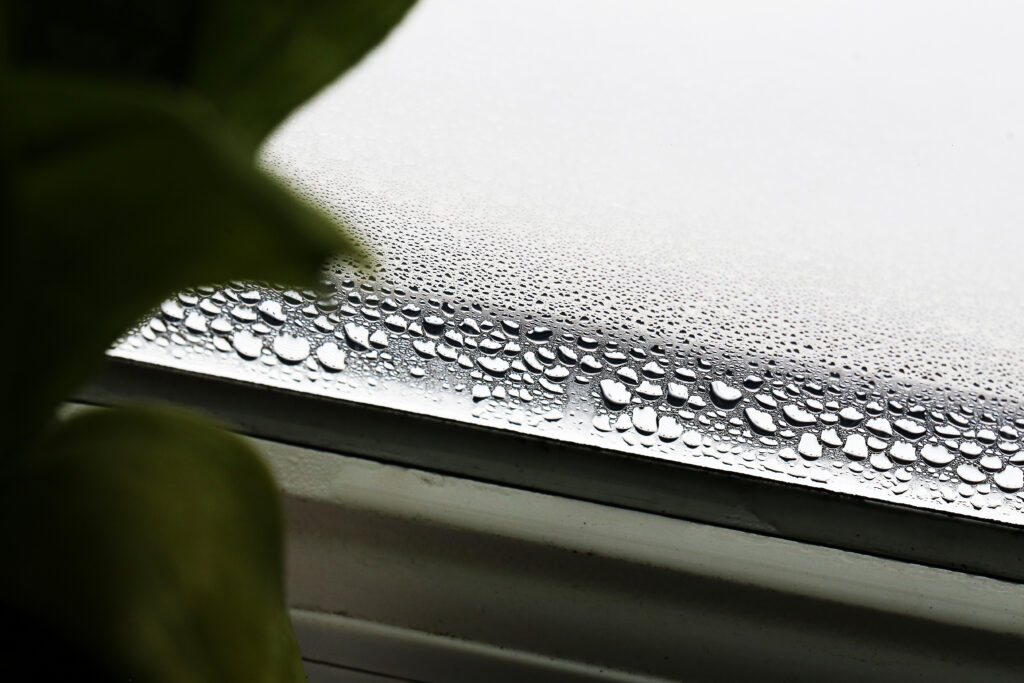
Condensation on interior windows can cause structural damage, impair your view, and compromise indoor air quality. You can reduce the risk of condensation by lowering your indoor humidity and improving ventilation. You should also maintain a tight home envelope to keep outside moisture from coming in.
Improving ventilation
Condensation will form when moist air inside your home encounters the cold surface of your window. Increasing ventilation can promote airflow that allows moisture to escape. When weather permits, open windows and doors for approximately 20 minutes per day. You can also run exhaust fans when showering, bathing, or cleaning to remove moisture before it condenses on your windows.
A heat recovery ventilation system transfers heat from outgoing air to incoming fresh air while continuously exchanging and refreshing indoor air. This reduces your heating and cooling load while helping reduce fluctuating temperature differences. Consider having a professional install an HRV system to prevent condensation on your windows.
Addressing relative humidity
The relative humidity level in your home should always be between 35% and 50%. A hygrometer can give you accurate humidity readings, and many smart thermostats now include built-in sensors. You can use a dehumidifier to remove excess moisture from your indoor air. Portable models are beneficial in moist areas like basements and bathrooms. However, you may experience inconsistent relative humidity that leads to condensation.
A whole-home dehumidifier removes moisture from the air circulating through your HVAC system. You’ll reap the benefits of drier air throughout all your living spaces. Not to mention, whole-home models are easier to maintain than portable ones.
Considering your household temperature
It’s important to avoid a large temperature difference between your home’s interior and the outside. Keeping window surfaces above the dew point can reduce the risk of condensation. Use weatherstripping and caulk to fill in small gaps and cracks that may be contributing to a large temperature difference.
You should also maintain a consistent interior temperature. Making frequent adjustments of more than a degree or two can cause moisture in the air to condense on window surfaces. Consider upgrading to a smart thermostat to more effectively monitor and control your home’s temperature.
Consider upgrading your windows
Very old windows often experience condensation on their surfaces if they have many air leaks or seal damage. In some cases, the condensation can form between the panes. Modern windows with double- or triple-glazing and low-E coatings keep the interior surface warm. Upgrades also include better built-in weatherstripping or gas fills between the panes, providing better insulation and efficiency.
Minimizing condensation on interior windows is easy with proper ventilation and by balancing indoor humidity. Follow us on Instagram for more helpful ideas. Upgrade your windows with the help of a knowledgeable professional in your area.

