
Multiple pitches and planes give your home character, but they also create high-stakes target zones for leaks. Unfortunately, these features often create weak points where they meet. These junctions cause water to change direction. Even a tiny installation error forces moisture off its intended route and straight into your home’s structure. This can lead to substantial damage over time.
How transitions create major weak points
Valleys and pitch break funnel runoff, which results in a concentrated flow of water. Undersized or incorrectly lapped flashing simply can’t handle that volume of runoff, causing the seal to fail under pressure. This results in water being forced underneath your roofing materials.
Different materials, such as your metal flashing that sits against wood or masonry, expand and contract at different rates when the temperature fluctuates. If these transitions are poorly designed, they won’t account for this. This thermal cycling tears at your sealants and wrenches fasteners loose, eventually breaking the waterproof seal entirely.
Transitions require a more intricate layering of underlayment, sealants, and flashing than a large, flat expanse of shingles. Otherwise, when it’s windy and rainy, water can be pushed into gaps. This allows moisture to enter the wall assembly.
Transition failures
Roof-to-wall joints rank among the most common failure points. If you skip the kick-out flashing, you invite rainwater to bypass your gutters and dump directly into your siding and interior walls.
Pitch breaks need to be properly installed as well. Water has a way of finding the smallest gaps, especially where steep and low-slope sections meet. The seams are designed to shed water, not hold it. Standing water relentlessly attacks those seams until they give way.
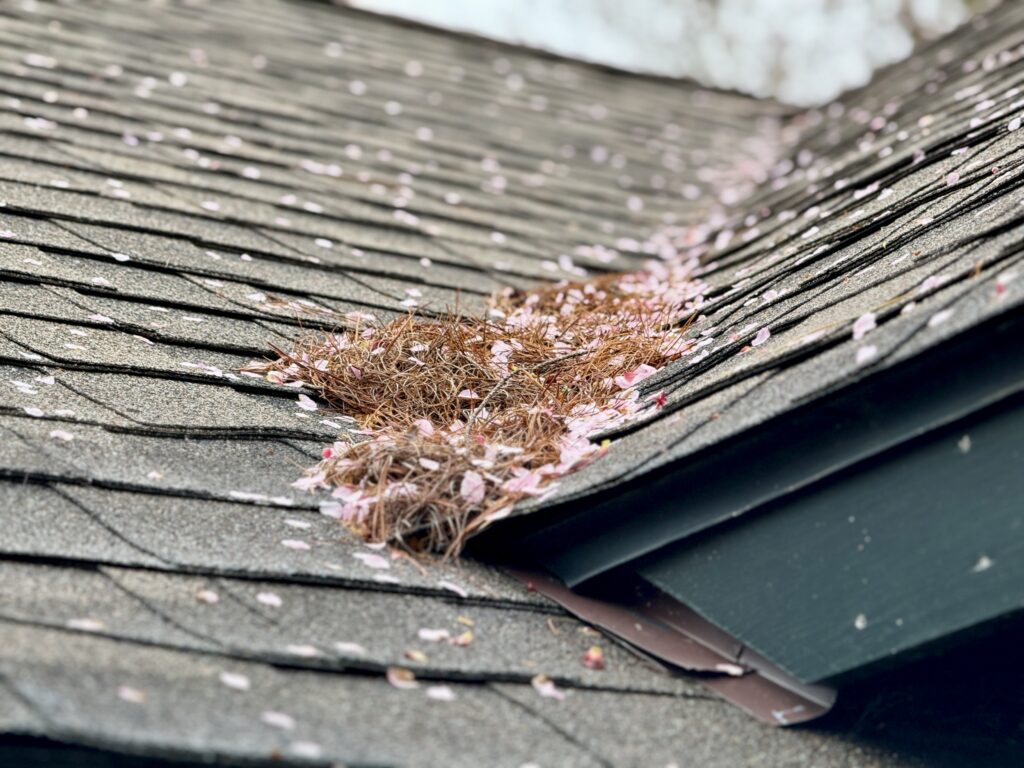
Debris can accumulate wherever two roof slopes meet. This leads to dams, which can push water under your shingles.
Hidden damage
Transition leaks are hard to spot. Moisture creeps along your rafters and through wall cavities, rotting your home from the inside out long before you see a stain on the ceiling. This includes problems such as structural rot, mold, and insulation failure.
Continuous moisture destroys your roof deck’s integrity, softening the wood until it rots. This saturation wrenches your wall frames out of alignment, jamming your doors and seizing your windows. Moisture trapped in the attic can result in mold growth in as few as 24 to 48 hours. Moisture destroys your insulation’s effectiveness, tanking its R-value and driving up your energy bills.
You don’t have to give up on the idea of a beautiful roof. Keep the pitches and planes that make your home stand out. Just make sure to consult a professional roofer who understands the importance of properly handling these transitions. You can find a local expert by visiting our Marketplace. Follow us on Facebook and Instagram for additional tips and inspiration.

