
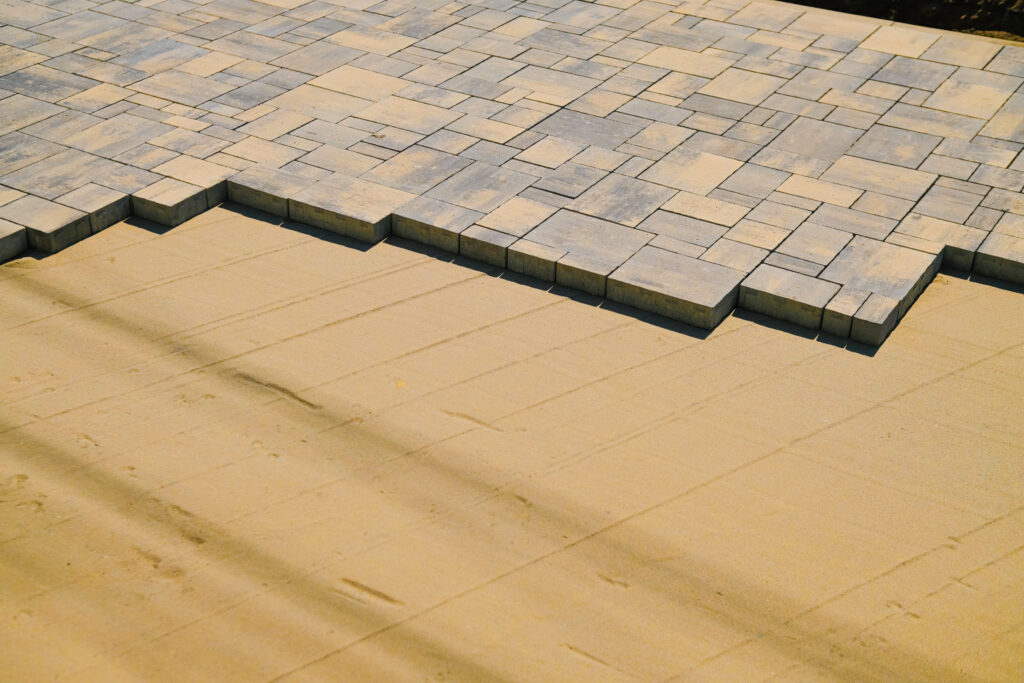
Pavers are a practical, affordable, and versatile product for your property. They’re an ideal material for things like sidewalks, walkways, patios, and even driveways. While pavers can hold up well for many years, their installation matters. Specifically, whether pavers are on level or sloped ground will determine how they behave. Professionally installing pavers according to proper methods will prevent shifting, water pooling, and damage.
Paver use on level ground
Pavers work well on level ground. However, that doesn’t mean there aren’t issues to keep in mind. Proper ground preparation will prevent issues and keep the pavers stable. You shouldn’t have to worry about future adjustments or repairs when working with level ground.
Even distribution of paver stones is possible on level ground. This reduces the risk of uneven settling, which can lead to tripping hazards and cracking. A professional will compact the earth, potentially place a stone layer, and securely install the pavers with a layer of sand beneath.
It’s important to consider drainage with your pavers on level ground. Flat surfaces don’t experience easy drainage, which can lead to water pooling and seeping in between the joints of the pavers. A professional can install pavers at a slight pitch of about one-eighth inch per foot. This isn’t enough to be visibly noticeable, but it helps direct water away from your pavers.
Maintaining paver stones on level ground may include removing weeds and grass from the seams. If water pools, the sand or dirt between the joints may need to be refilled. Routine cleaning of the pavers can include hosing or pressure washing the surface.
Paver use on sloped ground
Installing pavers on sloped ground is more difficult than on level ground. Gravity plays a significant role in determining how pavers drain, settle, or move. It’s normal for pavers to want to move in a downhill motion. This can cause gaps between pavers and edge reinforcements to shift or slide. There are steps professionals can take to prevent movement, including reinforcing the base layer and using stronger edge restraints.
One issue you won’t have to worry about too much is drainage. Slopes will promote water movement to prevent pooling. However, you can still experience issues like joint sand or dirt washing away or erosion toward the base of the structure.
Installation is more challenging when working on a sloped surface. Work with a professional to determine which upgrades are necessary for a successful installation. Steps, strong base layers, and perpendicular paver placement are all options.
Take on a successful paver installation with the help of a knowledgeable professional in your area. You can also head to our Facebook and Instagram pages for inspiration and ideas.