
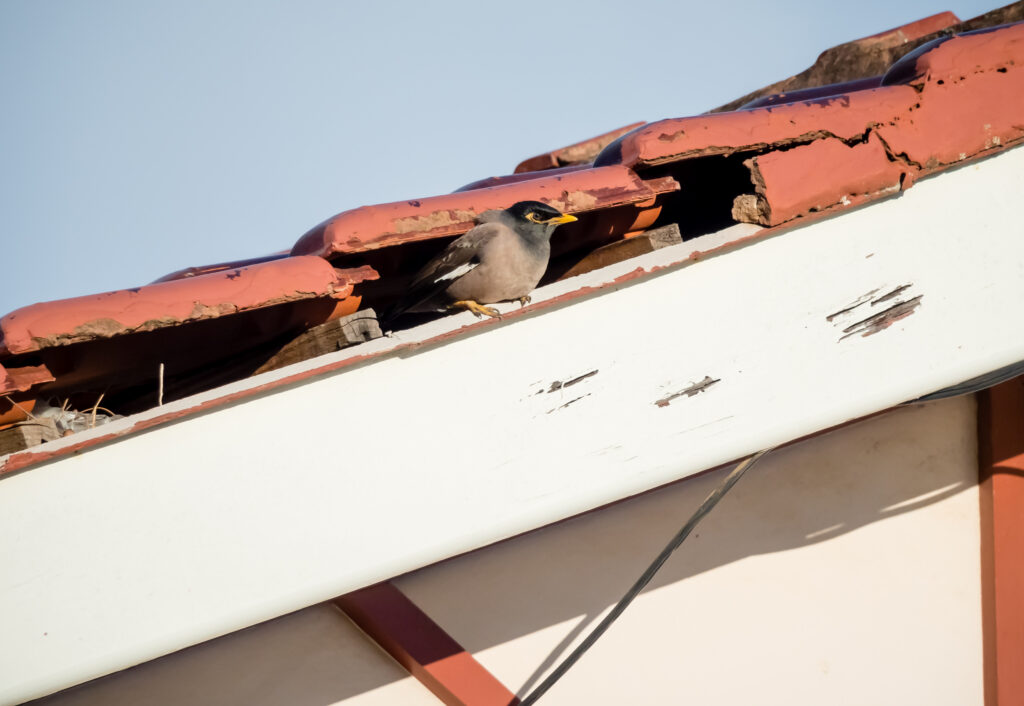
Wildlife and pests can cause destruction to roofing systems by chewing or tearing through roof decking. Nests can prevent drainage, resulting in water damage and algae growth. Understanding the impact of pest and wildlife infestations allows you to take a proactive approach to protect your roof and home.
Chewing through roofing materials
Squirrels and raccoons can chew through a variety of roofing materials, including shingles, wood, and vent screens. In some cases, wildlife can tear off soffits, exposing wood underneath. Even a small opening can result in serious moisture intrusion and extensive damage. Smaller pests can find their way into these holes, furthering the potential for problems and destruction.
Removing entry points helps protect your roof from wildlife and pest damage. Trim tree branches that are hanging close to your roof. Eliminate nearby food sources, like feeders and garbage cans, as this can attract animals and pests to the area.
The creation of nests
Wildlife and pests can build nests inside gutters, vents, chimneys, and attics. Over time, this nesting material can lead to drainage issues and moisture accumulation. Portions of your roof can rot, and water may leak into your home.
Clean your gutters and downspouts regularly to prevent drainage problems. You can install gutter guards to prevent nest debris from accumulating inside your gutters and downspouts. A routine roof inspection allows professionals to spot nests and remove them immediately.
Structural integrity issues
Pests like termites, ants, and other wood-damaging insects can burrow into roofing materials and cause significant destruction. Your roof will struggle to protect your home from the elements if there are concerns with the structural integrity of shingles, rafters, fascia, and decking. Problems are even more common on flat or low-slope roofs as water can pool here. Unfortunately, many homeowners don’t know there’s a problem until much later when the roof sags or leaks.
Corrosion of roof surfaces
Bird droppings are very acidic and can eat away at roofing materials, especially metal. Corrosion can damage a roofing system over time, leading to leaks and pest infestations. You can deter birds by using reflective tape or predator decoys, such as fake owls or falcons.
Feeding on wood
Termites feed on wood for survival, making the space underneath your shingles an ideal location for a nest. Because this area of your roof decking isn’t accessible, you won’t easily notice the presence of termites. This can weaken joists, decking, and rafters. Routine roof inspections can spot signs of termites early and address damage that can compromise the life span of your roof.
Proper roof care can reduce your risk of pest and wildlife damage. You can follow us on Instagram for more helpful tips and ideas. Consult with a knowledgeable professional in your area for roof assistance.

