
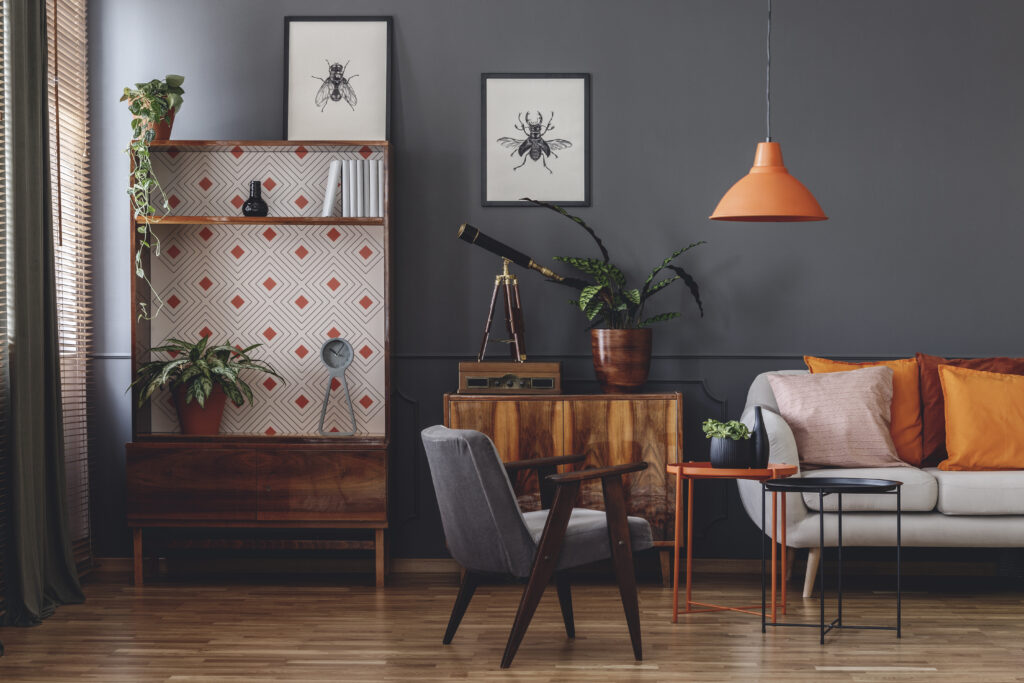
Mixing different design eras in a home is a delicate business. The good news is that there are ways to blend different vintage styles that will make your home a showcase. Read on to learn more tips on blending vintage decor.
Consider the scale of the room
Notice that large rooms often have intricate furnishings. These large rooms can accommodate Victorian or 18th-century French styles because they’re often elaborate even when empty. They feature elegant crown molding, carved stone hearths, pilastered walls, and high ceilings with coffers, bosses, or dentil courses. The clean lines of Scandinavian modern would get lost in such a large room.
On the other hand, a small room may be just the thing for this kind of furniture. Consider low Danish Modern bookcases, a coffee table, and an occasional table in a corner. This might pair well with a matching overstuffed armchair, a Davenport, and a pair of Victorian-era bentwood chairs. A Duncan Phyfe card table might stand in another corner holding a contemporary style lamp. All of it stands on a nearly room-sized jute rug. You might also place groups of contemporary artworks on the walls and flat surfaces.
Consider the room’s palette
One reason the room described above can work is that the decor shares a color palette, to some extent. This palette pulls everything together, even if they’re from different eras. The palette may be determined by the color you paint the walls and ceiling. Warm yellow walls complement wood and cream-colored upholstery. Books on the shelves and artwork add pops of more vibrant colors.
Ratio of styles
Some interior designers believe you should choose a dominant style for a room and add items from other styles and eras within it. The ratio between the dominant style and the subordinate style should be about 80 to 20. Of course, you should feel free to adjust this.
Do a little research
A bit of research into vintage design eras before you start decorating your rooms is worthwhile. Some eras are surprisingly compatible even if their respective heydays are a century apart. The newer style may even borrow aspects of the older style. A slender, rectangular coffee table from the 1950s might have echoes of a Shaker dining table from the 18th century. Arts and Crafts-style furniture looks remarkably modern, even though it dates to the late 19th to early 20th centuries.
Do a bit of editing
Another way to tastefully blend different design eras is to make a few edits. Don’t cram a space with so many interesting objects that the eye doesn’t really have a place to rest. Instead, find coherent themes of subject or color. If you’re going to mix more streamlined and modern furnishings with something ornate, less of the ornate is more.
Mixing different design styles can give your home a pleasing and unforgettable look. For more design ideas, check our pages on Instagram or Facebook. Get in touch with an interior decorator on our Marketplace to learn more.

