
When you plan your garage’s electrical capacity, you need to think well beyond the present. While you may have plenty of power for your current projects, there may not be enough for future ones. For example, you may eventually want to install an EV charger. Perhaps you want to upgrade to heavy-duty shop tools or add secondary appliances. A little preplanning now will ensure your garage remains a useful space for years to come.
Assessing your current and future loads
Calculate your current and future demand by categorizing your existing and potential equipment. Place items into a standard- or high-draw category. This will give you a clear idea of how much power you’ll need.
Your 120V equipment goes into your standard load category. These would be things like battery chargers, lighting, basic power tools, and vacuums. These items usually run on 15-amp to 20-amp circuits.
Items at 240V are high-draw equipment. When determining the amount of power necessary for the future, take into account things like air compressors, welders, or stationary woodworking tools. For those stationary woodworking tools, you’ll want to multiply each tool’s amperage by 125%. This will cover the surge of power during startup.
Planning the infrastructure
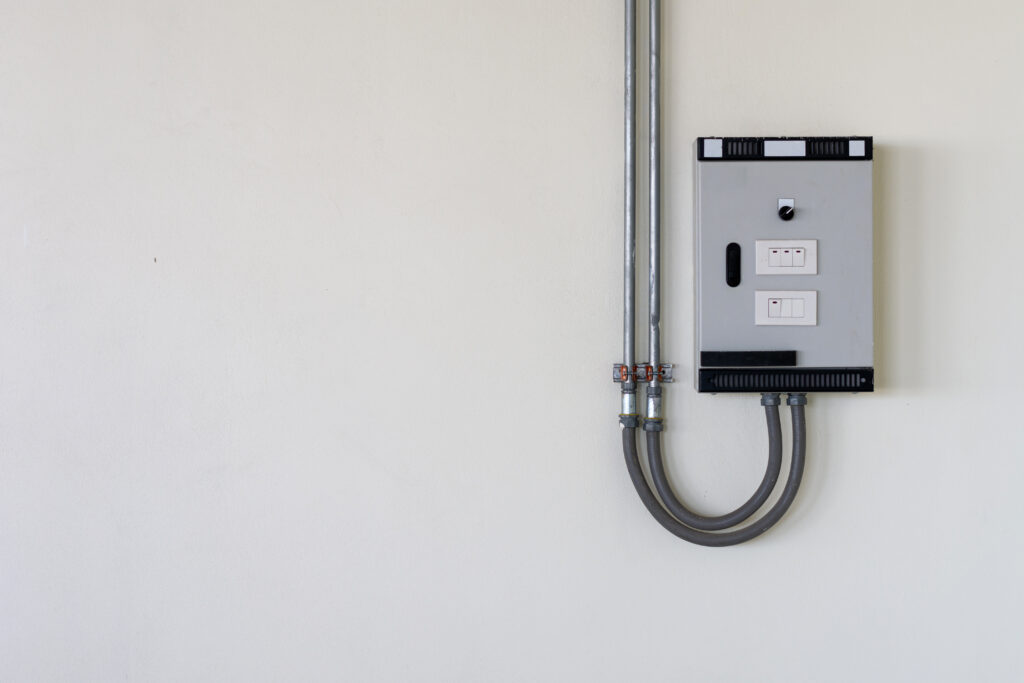
Before you do anything else, make sure your home’s main service can handle the added load of a garage. It’s also highly recommended to install a dedicated 60-amp or 100-amp subpanel in a garage. This creates a central point for adding new circuits without needing to run every wire back to your main panel.
Circuit and outlet layout
Put your garage lighting on a separate circuit from your outlets. That way, if a heavy-duty power tool trips the circuit, you’ll still have your lights.
Have 20-amp outlets placed every 3 to 5 feet along your workbenches and countertops. To comply with the National Electrical Code, you’ll need at least one dedicated 120V, 20-amp circuit for general use. Place standard outlets at least 12 to 18 inches from the floor. Many experts recommend placing workshop outlets 40 to 48 inches from the floor to make them more functional.
Code and safety compliance
All of your 125V, 15A, and 20A receptacles in a garage need to be GFCI-protected. This prevents shocks in what’s a potentially damp environment. When doing electrical upgrades in your garage, you may need a local building permit and inspection. This is required in many areas to ensure all work meets the latest safety standards. It also helps maintain your home’s insurance validity.
Once you install an electrical system that will handle all of your future garage needs, you can rest assured that you have the power to handle any changes or additions. You can find a local electrician to help you with this by visiting our Marketplace. Follow us on Facebook and Instagram for more useful garage and workshop ideas.

